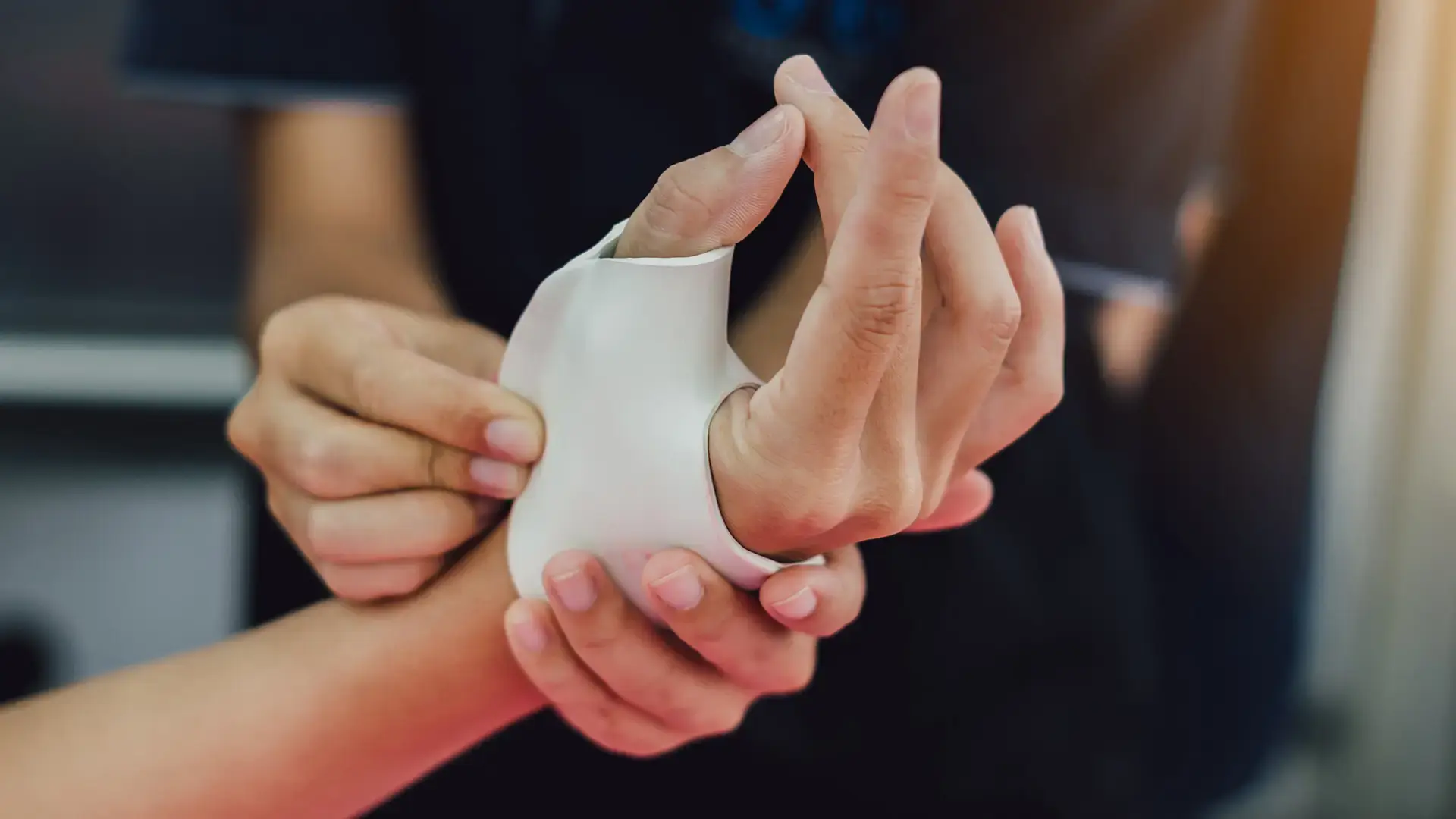
The surgery went as planned. The plate and screws are in place. So why does your wrist still hurt — and should you be worried? If you're weeks or months out from broken wrist surgery and the pain hasn't gone away, you're not alone in asking that question.
“Wrist pain after plate and screws is one of the most common concerns we see," explains Dr. Sidney Rabinowitz, a triple board-certified surgeon practicing plastic and reconstructive surgery as well as hand and microsurgery with The Center for Hand & Upper Extremity Surgery. “And the answer isn't always straightforward. Some discomfort is a normal part of recovery, and some isn't.”
Why Does My Wrist Still Hurt After Plate and Screw Surgery?
There are several well-recognized reasons why wrist pain after plate and screws can linger — and not all of them signal a problem. These are the most common causes:
- Hardware-related discomfort: The plate sits just beneath the skin and tendons. For some patients, the metal itself causes friction or irritation — especially during movement or in cold weather. This is a recognized side effect of metal plate fixation and does not necessarily mean something has gone wrong.
- Incomplete healing or non-union: In some cases, the fracture site fails to consolidate as expected. If the bone hasn't healed properly, pain will persist — and further evaluation is warranted.
- Normal post-operative inflammation: In the weeks after distal radius fracture surgery, the body is actively healing, which means swelling, sensitivity at the incision site, and stiffness are all expected.
- Tendon irritation: The hardware's position relative to the surrounding tendons can create friction over time. This is one of the more common sources of persistent wrist pain after plate surgery — and one of the more treatable ones.
“The hardware does exactly what it’s supposed to do, and that’s stabilize the fracture while the bone heals. But the tendons around the plate are living tissue, and they don’t always adapt without complaint.” Dr. Rabinowitz informs.
Wrist Recovery Timeline After Plate and Screw Surgery
Recovery from wrist fracture surgery follows a fairly predictable arc — though every patient’s experience is different. Here’s what a typical timeline looks like:
- Weeks 1–2: Significant swelling, bruising, and pain at the surgical site is expected and typically peaks early. Rest and elevation are key.
- Weeks 3–6: The bone begins to bridge and consolidate. Protective splinting often transitions to supervised movement. Pain should gradually decrease, though some hardware sensitivity is normal.
- Weeks 6–12: Physical therapy begins in earnest. Range of motion and grip strength improve progressively, but there may still be some discomfort.
- Months 3–6: Most patients regain functional grip and range of motion. Some hardware sensitivity may remain, particularly in cold weather or with direct pressure.
- Beyond 6 months: Ongoing or worsening pain at this stage is not a typical part of fractured wrist recovery. It warrants a specialist evaluation.
When Wrist Pain After Hardware Surgery Is a Warning Sign
If you’re experiencing any of the following, it’s time to request a specialist evaluation:
- Hardware failure signs: A visible deformity, a sudden change in wrist alignment, or a new popping or grinding sensation.
- Infection indicators: Fever, increasing redness or warmth at the incision site, discharge, or swelling that is worsening rather than resolving.
- Nerve symptoms: New or worsening numbness, tingling, or weakness in the hand or fingers that was not present before surgery.
- Pain that is worsening or plateauing: Ongoing discomfort beyond 3–6 months post-surgery despite completing physical therapy.
- Tendon rupture warning: A sudden loss of the ability to extend or flex a finger — particularly the thumb — can indicate a tendon rupture related to hardware irritation.
Experiencing one or more of these symptoms is not a reason to panic, but it is a reason to act. Many of these complications are very treatable with the right surgical expertise, and earlier intervention typically leads to better outcomes.
Surgical Options When Wrist Hardware Causes Ongoing Problems
For patients whose wrist pain has not resolved — or who have developed hardware-related complications — there are targeted surgical solutions, including:
- Complex wrist reconstruction: For hardware failure, non-union, or joint damage, a specialized surgical team can rebuild what conservative care can’t fix.
- Hardware removal: Once the bone has healed, the plate and screws don’t always need to stay. Removal is a common, straightforward procedure when hardware is causing ongoing irritation or discomfort.
- Nerve decompression or nerve transfer: Hardware-related nerve compression can cause numbness, tingling, or weakness that lingers long after surgery. Nerve decompression or transfer can restore sensation and hand function.
- Revision fixation: If the fracture hasn’t healed properly, re-fixation or bone grafting can get the repair back on track.
- Tendon repair or tendon transfer: A tendon damaged by hardware irritation can often be repaired or rerouted, restoring finger movement.
“These aren’t last-resort options,” says Dr. Rabinowitz, “they’re targeted solutions for very specific, identifiable problems.”
Still in Pain After Wrist Surgery? Our Specialists Can Help
Wrist pain after plate and screw surgery isn’t something to simply wait out — especially when it’s been months without improvement, or when new symptoms have appeared.
Whether the issue is hardware irritation, a tendon complication, nerve involvement, or a fracture that hasn’t healed properly, the surgical team at The Center for Hand & Upper Extremity Surgery has the expertise to identify the problem and address it. Reach out today to request a consultation.
 Patient Login










.png)