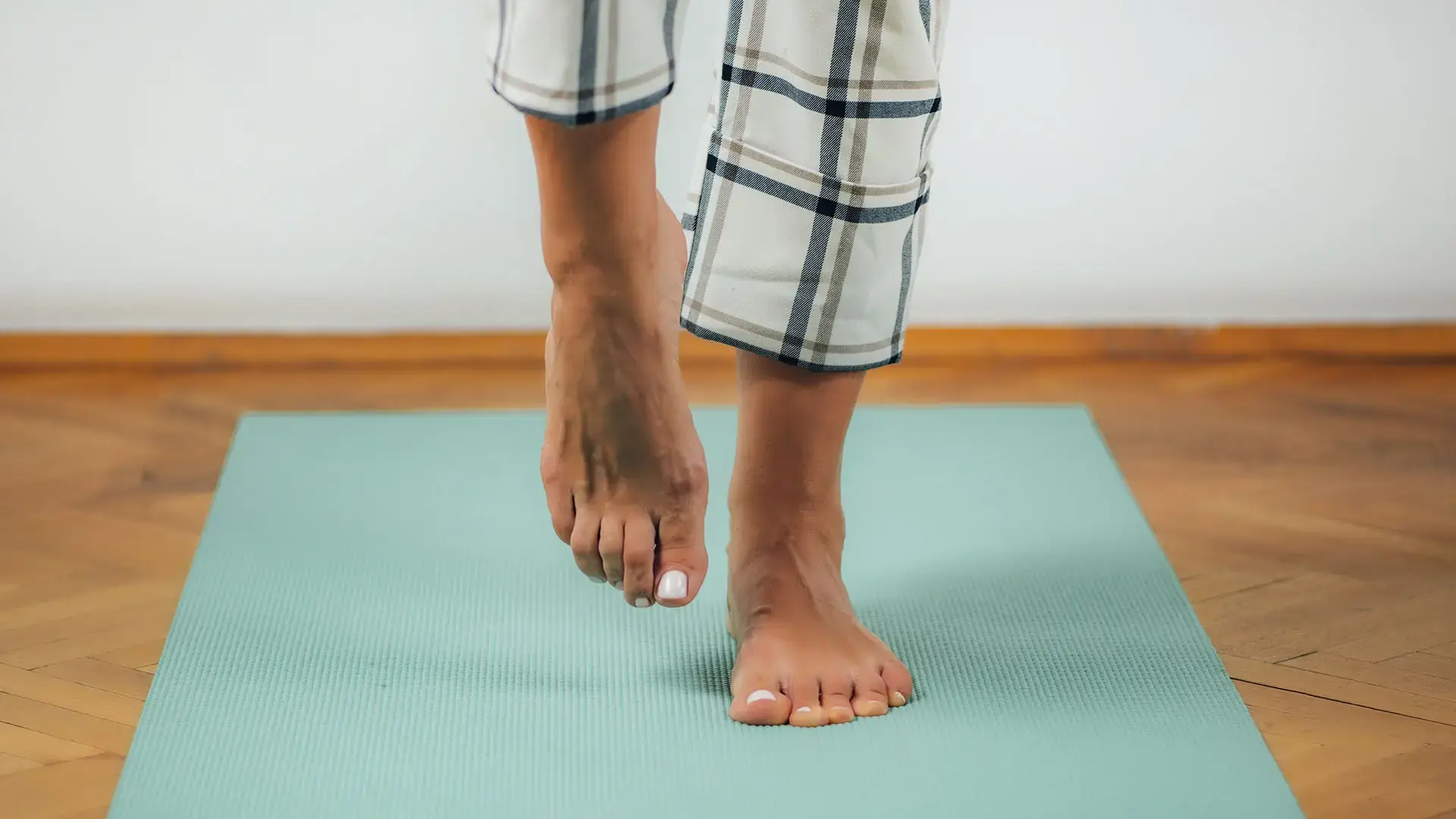
Foot drop can be unsettling. Whether you’re struggling to lift your foot while walking or noticing an unusual slapping sound as you move, this change can feel both alarming and confusing.
As Dr. Peter Andrawes, a plastic and reconstructive surgeon with The Institute for Advanced Reconstruction, explains: “Many patients don't realize that foot drop isn’t a diagnosis itself—it’s a symptom with several potential causes, many of which involve nerve injury.”
But how do you tell the difference between foot drop and an underlying nerve condition?
At The Institute for Advanced Reconstruction, our nerve specialists are trained to uncover the root cause, as an early and accurate diagnosis is the first step toward restoring mobility and preventing long-term damage.
What Is Foot Drop? Understanding the Basics
“If you have difficulty lifting the front part of the foot, a motion called dorsiflexion, you may have foot drop,” says Dr. Andrawes. This condition can cause the toes to drag while walking, often forcing patients to adjust their gait by lifting the knee higher than usual or swinging the leg outward in a motion called a steppage gait.
But here’s the critical distinction: foot drop is a symptom, not a standalone condition. It typically results from weakness or paralysis in the muscles that control foot and ankle movement, specifically those innervated by the peroneal nerve. This can affect your balance, posture, and ability to walk safely.
Some of the most common characteristics of foot drop include:
- Difficulty lifting the front of the foot (especially when walking)
- Toes drag on the ground during movement
- High-stepping gait (also called “steppage gait”) to avoid tripping
- Slapping sound when the foot hits the floor
- Weakness or paralysis in the muscles that lift the foot
- Numbness or tingling on the top of the foot or toes
- Trouble with balance or climbing stairs
- Worsening symptoms after leg crossing or prolonged kneeling
Nerve Injuries That Commonly Cause Foot Drop
“Several types of nerve damage can lead to foot drop,” Dr. Andrawes explains, “with damage to the peroneal nerve being the most common culprit.” This nerve branches off from the sciatic nerve and wraps around the fibula (just below the knee), making it vulnerable to compression or injury.
Other nerve-related causes include:
- Sciatic nerve damage: This can affect both the peroneal and tibial branches.
- Nerve root compression: Often due to herniated discs or spinal stenosis in the lower back.
At The Institute, our specialists use advanced diagnostics to pinpoint the exact location and severity of a nerve injury, a crucial step before recommending any treatment.
Non-Nerve Foot Drop Causes: Important Differentiators
Not all cases of foot drop stem from peripheral nerve injuries. Other potential causes can include:
- Muscle disorders (like muscular dystrophy)
- Central nervous system conditions, such as stroke or multiple sclerosis
- Structural issues, including hip or knee injuries that impact gait
- Metabolic or systemic conditions like diabetes or ALS
This multitude of potential causes is why a comprehensive evaluation is so critical. Treating foot drop without understanding its root cause can delay progress or make things worse.
Key Signs That Point to Nerve Injury as the Cause
If you’re trying to determine whether your foot drop is due to a nerve injury, look for these clues:
- Numbness or tingling in the leg, foot, or toes (especially the top of the foot)
- Weakness that follows a specific nerve pattern—often affecting the ability to lift the foot or extend the toes
- History of trauma or pressure on the knee or lower back (e.g., from surgery, prolonged leg crossing, or tight casts)
- Tinel’s sign: Tapping over the nerve causes a tingling sensation in its distribution
These signs help our specialists pinpoint nerve involvement and tailor your diagnostic plan accordingly.
When to Seek Specialized Care for Foot Drop
“If you’ve noticed changes in your ability to lift your foot, or if your symptoms have lasted more than a few days, it’s time to consult a specialist,” Dr. Andrawes cautions. Nerve injuries can worsen over time, and the earlier the intervention, the better your chances of full recovery.
You should seek professional care if you experience:
- New or worsening weakness
- Numbness spreading beyond the foot
- Difficulty with balance or walking
- Recent injury or surgery involving the hip, leg, or spine
Get Expert Foot Drop Treatment in New Jersey Today
If you’re experiencing signs of foot drop, don’t wait to seek answers. Our team of nerve specialists provides comprehensive evaluations to uncover the root cause—whether it’s nerve-related or something else.
We offer a full spectrum of treatment options, from conservative therapies to highly specialized nerve reconstruction procedures not widely available elsewhere. Patients from across the country travel to one of our 45+ locations for innovative care and compassionate support, delivered by leaders in the field.
Take the first step toward restored mobility and schedule your foot drop evaluation at The Institute for Advanced Reconstruction today.
 Patient Login