Please fill out the form below or call 732-741-0970
to contact The Institute for Advanced Reconstruction.


Name


Email


Phone


Date of Birth


Address


City / State


Zip Code


Insurance


Date of Injury or Onset


Diagnosis and Current Deficits


Surgical History/Comments


Practice News


Dr. Kaufman Has Phrenic Nerve Manuscript Published by Clinical Neurology and Neurosurgery

Dr. Matthew Kaufman of The Institute for Advanced Reconstruction in Shrewsbury, NJ, has had his manuscript “Diaphragm Paralysis Caused by Transverse Cervical Artery Compression of the Phrenic Nerve: The Red Cross Syndrome” accepted by Clinical Neurology and Neurosurgery for publication.

Clinical Neurology and Neurosurgery is devoted to publishing papers and reports on the clinical aspects of neurology and neurosurgery. It is an international forum for papers of high scientific standard that are of interest to Neurologists and Neurosurgeons world-wide. Professor Peter Paul De Deyn, Scientific Director of the Institute Born-Bunge at the University of Antwerp, Belgium, is the Editor-in-Chief.

Dr. Kaufman has continued to expand his unique expertise in the area of phrenic nerve surgery. Recently, he has also been published in the CHEST journal and presented a paper at October, 2011 CHEST seminar in Hawaii.

Dr. Matthew Kaufman Performs Specialized Phrenic Nerve Surgery on 25-Year-Old Ohio Woman


Phrenic Nerve Patient Heather Stutzman with Dr. Matthew Kaufman of The Institute for Advanced Reconstruction at the Plastic Surgery Center

Dr. Matthew Kaufman of The Institute for Advanced Reconstruction in Shrewsbury, NJ celebrated his 40th surgery for diaphragm paralysis—this one on his youngest patient to date, 25-year-old Heather Stutzman of Ravenna, Ohio. Kaufman, who is the only known surgeon to perform this surgery, conducted the procedure at the Jersey Shore Medical Center on September 30, 2011.

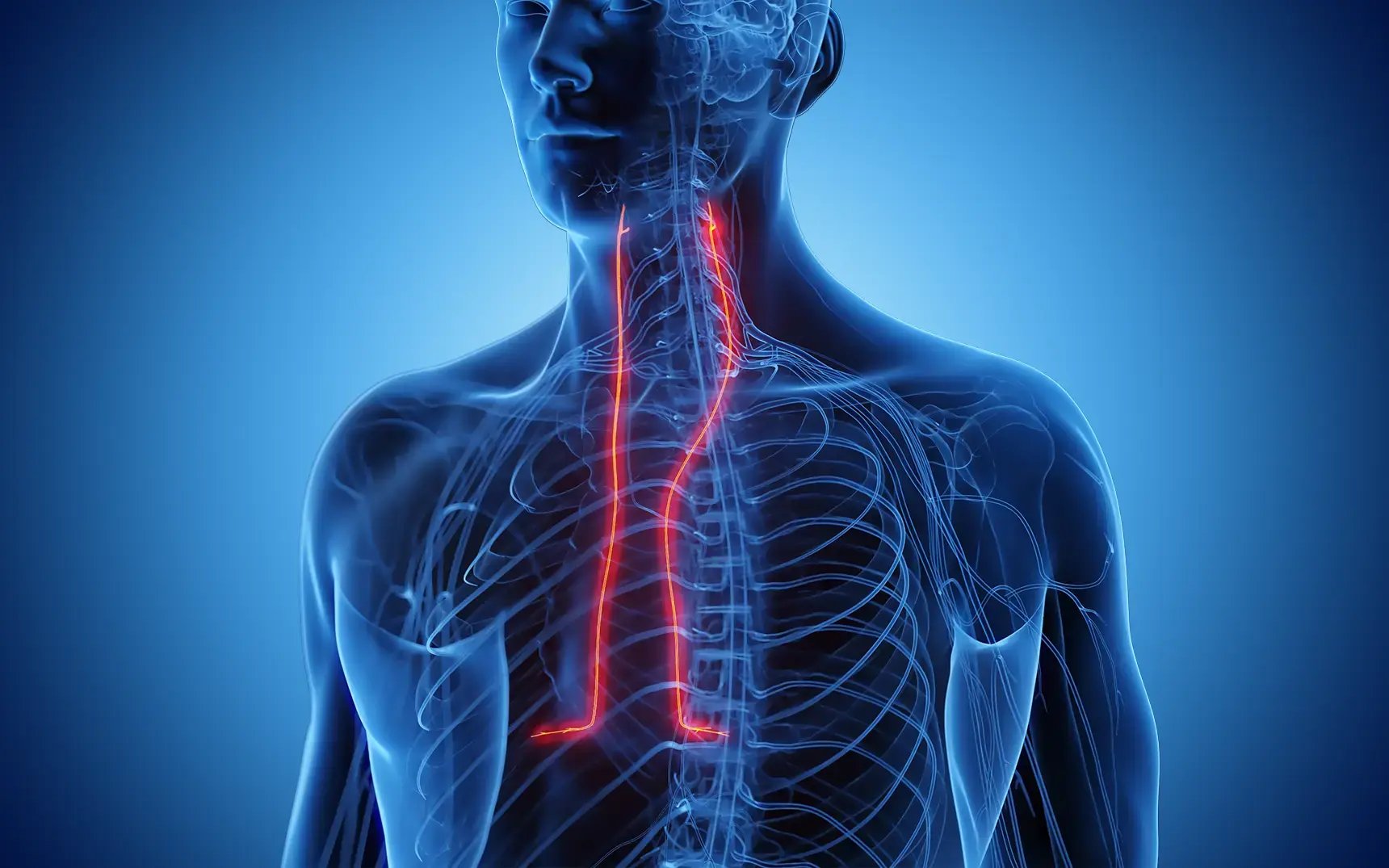
The phrenic nerve is a large nerve in the chest that controls the diaphragm, which is integral to breathing. Dr. Kaufman either corrects or transplants the nerve in order to restore function, a surgery, which he estimates is successful in 70-80 percent of his patients. While the causes of phrenic nerve injury may vary from accidents to injury during surgery for other conditions, in Stutzman’s case, it appears that radioactive iodine treatment for a thyroid condition likely caused her problem.

When Stutzman arrived for the procedure, she had been in despair. Not only had she been forced to quit the job working with the disabled that she truly loved, she faced the continuing risk of pneumonia and other medical problems, and suffered the discomfort and embarrassment of wearing a breathing device (oxygen tank). Also, she was so short of breath, she feared she could never have children.

Stutzman, who had been hospitalized with several bouts of pneumonia, was forced for the past year to carry the oxygen tank. As for so many of Dr. Kaufman’s patients, Stutzman’s diagnosis of phrenic nerve damage was a long time coming. Then, she was told by various doctors that there was nothing that could be done for that damaged nerve.

That’s when she went onto the Internet, and like many of his patients, found Dr. Kaufman. “I just wasn’t giving up,” said Stutzman. “I’m too young, and I’ve got my whole life ahead of me.” Her family and friends held a fundraiser spaghetti dinner and raised $7,000 for her expenses.

Following the surgery, Stutzman woke up and for the first time could take a deep breath, without struggling. By the second day, she went shopping in a nearby mall, her oxygen tank now a relic of the past. Denied bowling, dancing and her other activities, Stutzman will now happily begin a physical rehabilitation program to recondition her diaphragm muscle.

Stutzman’s mother, Michelle, and Heather’s boyfriend of nine years, Sean, accompanied her to New Jersey. The day following her surgery, with tears of joy in her eyes, Stutzman said to Dr. Kaufman, “I think I can be a mom.”

Her message, “If you’re told there is nothing that can be done, don’t give up. Dr. Kaufman saved my life.”

Dr. Matthew Kaufman is an award-winning cosmetic and reconstructive plastic surgeon, board certified in both Plastic Surgery and Otolaryngology-Head and Neck Surgery, and he is a Fellow of the American College of Surgeons (FACS). Dr. Kaufman embarked on his surgical training at one of the nation’s top training programs for Otolaryngology – Head and Neck Surgery at The Mount Sinai Hospital in Manhattan. He continued his training in Plastic and Reconstructive Surgery at the prestigious UCLA Medical Center in Los Angeles. Among his nerve surgery expertise which he performs together with his partners at the Institute for Advanced Reconstruction in Shrewsbury, NJ, Dr. Kaufman  is the only known surgeon to perform specialized phrenic nerve surgery. As of  October, 2011, Australia will be his furthest patient; 25 is the youngest he has operated on for phrenic nerve problems, and early 70s the oldest.

Q: How much of your practice is devoted to phrenic nerve surgery?

Approximately forty percent and growing. Each case requires a lot of time. In addition to the actual procedure, there is extensive pre-surgery preparation since most of the patients are from out of town. There’s a tremendous amount of time that goes into preparing each one. To fly across the country, or from someplace else in the world, and have a unique surgery is overall quite complicated.

Q: How common is phrenic nerve injury and what are its causes?

It’s probably more common than most people think, but hard to know. For example, what percentage of those with this problem is finding us at The Institute for Advanced Reconstruction?

I think there are some standard causes. If you break it down into broad categories you have a surgical injury (i.e. damage to the nerve while being operated on for other causes), an anesthetic injury (e.g. inadvertent damage by a needle passed into the neck), a manipulation injury (e.g. chiropractic), or some type of trauma (such as a fall from a horse, a car accident, or even a freak twisting the wrong way).

Q: What are the various factors among those requiring this procedure?

Age is a big factor for recovery; young patients regenerate better than older ones. Among our patients, the 25-40-year-olds do much better than the 50-70-year-olds in terms of recovery.

Two-thirds to three-four of the patients are men. Men have more injuries in general—so they undergo more surgery, and chiropractic, and more likely to get injured from it. Secondly, men are usually bigger and heavier—so if the neck and (big, heavy) arm twist, there is potentially more damage.

Q: How long have you been doing these surgeries, and do you consider 40 a landmark number of procedures?

I think that 40 is a lot for any procedure that’s never been done. I’ve been doing these surgeries since 2007, with the majority of them in the last year and a half. I specialized in phrenic nerve problems by accident. Our website was continually attracting patients with various rare nerve problems. I was challenged to figure out if I could do something for those with phrenic nerve problems requiring surgery.

It falls within my specialties—head and neck, and plastic surgery. The phrenic nerve is not commonly dealt with, unless it is neck or chest surgery, so thoracic or otolaryngology surgeons will encounter the phrenic nerve—but basically just to try to stay away from it. Until now, no one has attempted to actually get to the phrenic nerve—unless they inadvertently harm it– to do something positive with it.

I see the procedures I’ve done are just the tip of the iceberg. I still think the majority of the medical community that takes care of phrenic nerve injury patients has no idea yet, so the goal is to get the word out.

Q: How do you intend to spread the word of your work?

After our recent article in the CHEST Journal* and a well-received seminar in Hawaii**, I hope to expand my “doctor to doctor” outreach so that the medical community can become more familiar and comfortable with our treatment approach. It can be difficult to reach physicians, but now we are getting to more of them.

Q: How is your success rate with phrenic nerve surgery?

I’ve had a 70-80% percent success rate, which is consistent with other nerve surgeries that have been around for years.  No one has 100 percent success. We don’t know enough about the nervous system to be able to surgically achieve that kind of success rate. While we’ve had a remarkable number of positive life-changing results with phrenic nerve cases, we’ve had patients who’ve not gotten better, and those we are waiting on over time, and we don’t know what their ultimate success will be. It can take a long time.

I always want to make procedures better. You always aim for 100 percent success; obviously, no one gets that. That being said, full function (of the phrenic nerve) is the goal I hope for. But if someone gets even 50 percent improvement, his or her life is going to be better.

Over time, I’ve learned a tremendous amount.  I have a better understanding of how the nerve functions, and how it gets damaged. So with each case, the success rates are going to get higher.

Q: How do you determine your success rate?

Other than the patient telling you they feel better, there are really only several tests you can do. One would be a study of the nerves, but no one wants to come back and get needles stuck into them for this purpose; another is an x-ray to look for motion in the diaphragm, and the third is breathing tests–pulmonary function tests–which don’t always coordinate with patients’ symptoms.  Pulmonary rehab is also an important part of the recuperative process that can help improve outcomes.

Q: How have you been impacted by the psychological or emotional aspect of doing this procedure over time?

I’m more in tune with the emotional aspect, since previously I never fully realized the implications of this condition in someone’s life, and quality of life. Most physicians still believe phrenic nerve injury is a relatively minor problem and that most people can live with, and that they don’t necessarily need to be treated for it. But my patients have taught me otherwise. That’s what we’re trying to teach the medical community.

Q: What can the patient do to help his/her odds?

If patients have this surgery they have to exercise the muscle (diaphragm). There are two things that are damaged: the nerve and the muscle. We’re only treating the nerve. I can’t make the muscle better. The muscle has to rebuild itself by exercise, usually through a pulmonary rehabilitation program.

Q: Is every case different both physically and, psychologically?

Yes, each case is different. It’s never cookie-cutter. It’s not like gallbladder surgery. It keeps me on my toes. We always have a standard game plan going into surgery, but I never completely know what I’m going to find until I go in– for example, if a person will need an actual nerve transplant– or what the outcome is going to be. It’s hard to prepare patients; that’s why I tell them all scenarios, and proceed with cautious optimism. We also turn away a lot of people. Just last week I turned a man away. Although he is very symptomatic, he had inconsistent results on tests we require. His tests show motion in his diaphragm, so I’m not going to take a person with a functioning diaphragm into surgery. I’ve probably turned away as many patients as I’ve operated on.

Q: Do you get ‘performance anxiety’ before doing these surgeries?

I wouldn’t say anxiety, but you get your “game face” on; you get into the zone. You have to plan, think, prepare. One of my mentors said, you have to do three things for surgery: study it, know what you’re going to do; envision the entire process in your head; finally, realize that process.

*Reinnervation of the Paralyzed Diaphragm: Application of Nerve Surgery Techniques Following Unilateral Phrenic Nerve Injury


Australian Don Bird Undergoes Successful Phrenic Nerve Surgery

Don Bird waited a year and four hours for his phrenic nerve surgery–the year to raise the funds and complete the pre-operative process to come to the U.S., and the four hours it took Dr. Matthew Kaufman to complete his surgery.

And while that surgery was successfully completed, it turns out it was among the most challenging procedure to date. Dr. Kaufman, who is the only surgeon he knows of to do this procedure in the U.S., and perhaps in the world, ranks this as the most complicated. The four-hour-procedure was his longest of the 40 phrenic nerve procedures he has done. “This case has been among the most difficult,” he said.

The amount of damage Dr. Kaufman found in the patient–something that can only be determined once the surgery takes place–necessitated a nerve transplant. The most difficult and time-consuming aspect of the surgery was finding the two locations above and below the area of injury among all the scar tissue to which to attach the transplanted nerve, taken from Bird’s ankle.

“It may likely take the better part of a year until he notices some improvement,” said Dr. Kaufman following the surgery. “That’s how long it can take for a nerve graft to regenerate.” This is unlike those of Dr. Kaufman’s phrenic nerve patients–who don’t require an actual nerve transplant–who sometimes feel an immediate improvement.

Part of the difficultly of Don Bird’s case may have to do with the extent of time from the original trauma until the onset of phrenic nerve-related difficulties (Bird had eight cases of pneumonia within the past two years). Bird had a neck procedure for removal of a melanoma at the age of 17. That original trauma was 32 years ago. Dr. Kaufman’s patients usually average a year or two from the onset of the original trauma to the phrenic nerve surgery.

Perhaps the best endorsement of Dr. Kaufman’s surgery was the comment by guest observer Dr. Shaocheng Zhang, Professor, Chief Surgeon, Department of Orthopedics, Changhai Hospital. Dr. Zhang is the special invited guest who traveled from China to be part the November 5th symposium, Solutions for Spinal Cord Injury, Paralysis and Neuropathy with the doctors from The Institute for Advanced Reconstruction.

Following the surgery, Dr. Zhang, a world leader in his area of his specialty told Dr. Kaufman, “You did a good job under the circumstances.”

Concludes Dr. Kaufman, “With this surgery, we have given Don Bird a chance to recover from his injury. My sense of the result is cautious optimism that in the months and years to come, Don Bird will see some improvement.”

Dr. Kaufman will next see the patient on Sunday morning, with subsequent appointments to make sure Bird is stable before returning to his native Australia.


Dr. Matthew Kaufman and patient Don Bird of Australian Take to the Airwaves

Bert Baron, host of New Jersey Today! on WCTC 1450 am, featured Australian Don Bird and his surgeon, Dr. Matthew Kaufman, for an hour live broadcast on his show on Wednesday, November 2, fewer than 48 hours from Bird’s phrenic nerve surgery. Baron asked all the right questions, leading to a subsequent flood of interest from those with issues and questions on the various nerve surgeries performed by Kaufman and the physicians at The Institute for Advanced Reconstruction. Baron concluded the interview by telling Don Bird that in all due respect to his native Australia, the radio host once tried Vegamite, and couldn’t hack the taste of that famous Aussie staple. To listen to the full interview, click onto the podcast at http://media.wctcam.com/Podcasts/1597/donbird.mp3

The Bird has Landed – Don Bird’s Journey to America

That’s the title that phrenic nerve surgery patient Don Bird gave on his Don Bird Foundation website blog to describe his arrival in New Jersey. After his year-long quest (including family and friends doing substantial fundraising) to reach our shores from his native Australia, Don Bird is, in fact, here (and literally photographing the leftover snow from the recent storm).

The past two days consisted of media appearances by both patient and physician, Dr. Matthew Kaufman, and to watch and listen to the two of them was nothing short of both heartening and inspiring.

Often those of us not intimately involved with illness or medical procedures are not privy to what underlies this journey. At the conclusion of the hour-long on air interview on WCTC Radio, and less than 48 hours before his surgery, Don Bird said: What I haven’t expressed yet is that if nothing more comes of this, my family and I are glad we made the journey.

For Bird and his wife, an apparent “pit bull” who never took “no” for an answer from Don’s Australian physicians and searched the Internet to find Dr. Kaufman, the quest has brought out the best in their community: from their 14-year-old son bike riding over 1,000 kilometers in ten days for fundraising for his dad (that netted $13,000); to the three schools his children attend each waiving the year’s tuition on behalf of his Don Bird Foundation—as Bird said on the air, “Sometimes saying thank you just doesn’t seem like enough.”

I Knew I’d Found Our Man
It takes an enormous amount of time, testing, phone consultations with fellow physicians, and plain old paperwork to arrange for any patient to undergo surgery. Imagine how complicated all that is with connections between New Jersey and Don Bird’s native Australia. (Kudos to Heather O’Neill, who assists Dr. Kaufman, and was the “lifeline” connection between Bird and The Institute for Advanced Reconstruction and Dr. Kaufman).

Considering the time difference, Bird and his wife at one point awaited a scheduled call from Dr. Kaufman—at 4 am Austrailian time. “I’m sorry for waking you up,” Dr. Kaufman said to Bird. “What doctor says something like that?!” Bird told us as he related the story. He then added that after that gesture and comment by Dr. Kaufman, “I knew I’d found our man.”

Divine Luck
Don Bird made it out of Australia one day before Qantas Airlines, his scheduled carrier, went on strike and shut down operations. He made it with one day to spare before the sudden East Coast snowstorm shut down local airport operations.

Welcome to New Jersey
The Jersey Shore Medical Center left Bird, his 16-year-old daughter and his mother-in-law who escorted him, a few “provisions” in their hotel when they arrived: a humidifier, some coconut cream cakes, and a double album of Bruce Springsteen.

Dr. Kaufman & Co.
Among those observing Don Bird’s surgery will be Dr. Shaocheng Zhang, of Changhai Hospital. Dr. Zhang has rerouted peripheral nerves to restore function in hundreds of patients with spinal cord injuries, a procedure not currently done in the United States. Dr. Zhang is part of the symposium on November 5, Innovative Solutions for Spinal Cord Injury, Paralysis and Neuropathy: A Multispecialty Approach.

If you are seeking the latest in paralysis treatment and nerve reconstruction, contact the Institute for Advanced Reconstruction today.

Located in Shrewsbury, Somerville, Freehold, Brick, East Brunswick, Edison, Egg Harbor Twp, Manhattan

Meridian Cancer Care

Home | Reconstructive Surgery in NJ | About Reconstructive Surgery | Nerve Surgery
Breast Reconstruction | Spinal Cord Injury Treatment | Travel To Our Offices
Patient Forms/Resources | Meet the Doctors | Practice News | Contact Us

Powered by Points Medical

Entries (RSS) | Sitemap